 Ultralight~$599
Zpacks
Zpacks Plex Solo
No citable rating — see why we hide some.
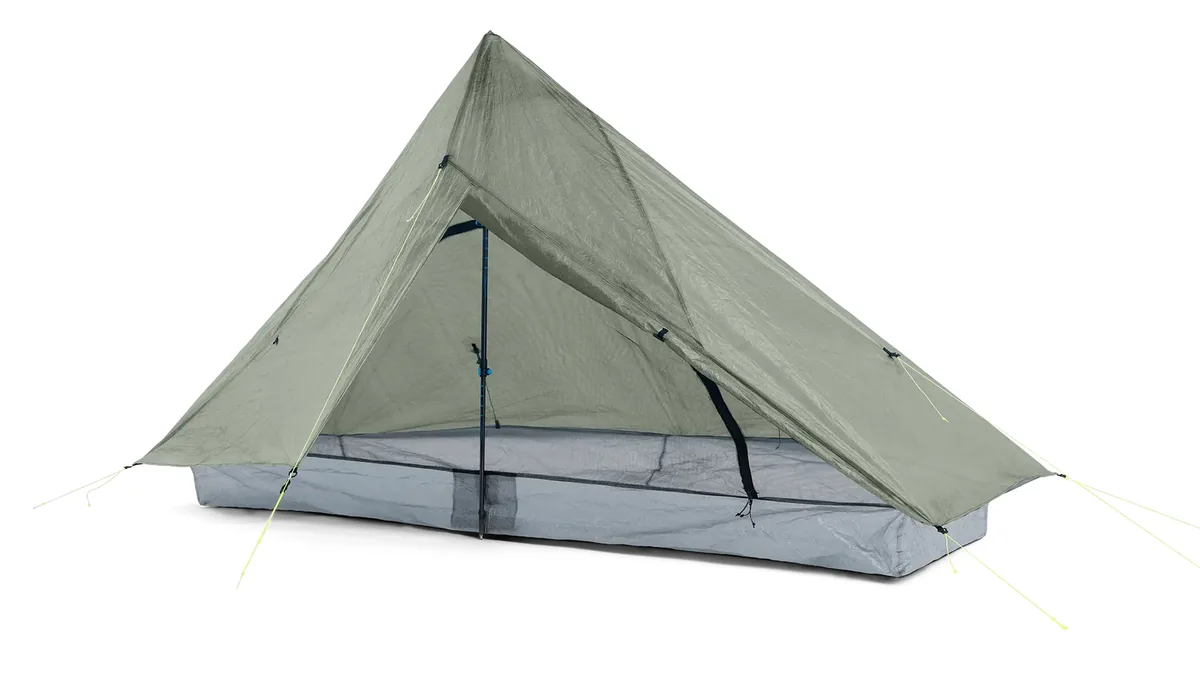
Twelve point three ounces is the lightest full shelter in this catalog — bathtub floor, bug netting, taped seams, storm doors, all of it — and it stands on one 52-inch trekking pole. Fifty-two inches is also the peak height, which is the tallest here, so you can sit fully upright in a tent that weighs less than a litre of water. Twenty point six square feet for one person is roomy by solo standards. What you accept is single-wall condensation, a $599 price, and a shelter whose fabric you handle carefully for the rest of its life.
Floor area per person
20.6 sq ft
Roomy — over 17 sq ft each — room for packs inside and to sit up without hitting
Weight per person
12.3 oz
from the trail weight of 12.3 oz
Peak height
52 in
Approx. price
~$599
Pads: 38.0 in of floor width each — 1 × 25 in pads fit.
Length: a 86 in floor leaves room for a sleeper up to about 6ft 8in once you allow six inches for a foot box and a pillow.
Best for
A solo thru-hiker whose base weight is the whole point.
Specifications
- Type
- Ultralight
- Rated capacity
- 1-person
- Floor area per person(estimated)
- 20.6 sq ft (roomy)
- Floor area
- 20.6 sq ft
- Peak height
- 52 in
- Minimum trail weight
- 12.3 oz
- Weight per person(estimated)
- 12.3 oz (trail weight)
- Packed size
- 4 x 11 in
- Interior floor width
- 38 in
- Pad fit(estimated)
- 1 × 25 in pads fit
- Fits sleepers up to(estimated)
- 6ft 8in tall
- Doors
- 1
- Vestibules
- 1
- Freestanding
- non-freestanding
- Poles
- trekking poles
- Wall type
- single wall
- Season rating
- 3-season
- Fly fabric
- Dyneema Composite Fabric 0.55 or 0.75 oz/sq yd
- Floor fabric
- Dyneema Composite Fabric 0.75 or 1.0 oz/sq yd
- Approx. price
- ~$599
Features
- 52 in peak height — the tallest in this catalog
- Single 52 in trekking pole pitch
- Two overlapping storm doors with one screen door
- Rolls to 4 in diameter
In its favour
- Lightest complete shelter here at 12.3 oz
- 52 in of headroom means sitting upright, not hunching
- 20.6 sq ft is generous for a one-person footprint
- No seam sealing needed — Dyneema is waterproof from the first pitch
- Ten guy-out points on a single-pole shelter, which is what makes the pitch stormworthy
Against it
- Single wall, so cold clear nights leave condensation on the inside
- $599 for a one-person shelter
- One pole and a tight guyline set means the pitch has to be done properly to be storm-worthy
- Zpacks publishes vestibule depth but not vestibule area
Written from the published specification sheet, not from owner reports.
What owners report
Drawn from archived owner discussions, not from a test of our own.
What owners like
- Independent wind testing found guylines to be the biggest factor in performance, and the Plex Solo's ten guy-out points helped it noticeably
- It is the reference weight for a fully enclosed solo shelter, and everything else in the class is measured against it
- The single-pole pitch is easy and takes a small footprint, which owners rate for finding sites others cannot use
- Owners swap the factory guylines for lighter Dyneema line and get it down to around 378 g, which the design supports
- Its shape has been popular enough that Zpacks has built other models on it
Common complaints
- Condensation is the defining complaint — one owner describes giving up on it after the Alps because the walls constantly wet their bag and head
- Tall hikers struggle to get clear answers about fit and report spending months trying to find out
- It is expensive and does not include stakes, which owners raise together as a double sting
- Pitching it on rocky or gravelly ground is genuinely hard, and owners plan around that
- The lighter floor option worries owners about durability, and the weight saved turns out to be marginal
At this weight there is no other complete shelter most people will seriously consider, and everything about owning a Plex Solo follows from that. It is one pole, ten guy points and 12.3 ounces, and independent wind testing specifically credited those guy points for how well it did.
The defining complaint is condensation, and it is not a mild one. An owner who took theirs through part of the GR5 in the Alps describes giving up entirely — walls permanently wet, touching them, waking with a damp bag at the feet and head. That is the single-wall trade at its worst, and it is what sends people back to double-wall shelters despite the weight.
The other practical notes are all about the edges of the design. Stakes are not included on a $599 tent, which owners find irritating. Pitching on rock or gravel is hard because everything depends on stakes. And tall hikers report struggling for months to find a straight answer about whether it fits them — the floor is 86 inches, so the six-inch rule puts it at roughly 6ft 6in on paper and rather less in practice.
Questions people ask about it
How bad is the condensation?
Bad enough that owners give up on it. One describes the walls being permanently wet through an alpine trip and their sleeping bag getting damp at head and feet from contact. Venting and site choice reduce it; nothing eliminates it. It is the price of a 12-ounce shelter.
Is the Lite floor worth it?
Owners who measured found the saving marginal — swapping the factory guylines for lighter line saves about as much as the thinner floor does, and owners worry about the 0.75 oz/sq yd floor's durability. Most conclude the standard floor is the better buy.
Will it fit a tall hiker?
Owners report spending months trying to get a clear answer. The floor is 86 inches long, which leaves roughly 6ft 6in once you allow for a foot box and pillow — on paper. The tapered ends mean the real limit is lower, and tall owners look at the Altaplex instead.
Can I pitch it on rocky ground?
With difficulty. It depends entirely on stakes, and owners heading to rocky terrain like the Dolomites ask about this specifically. Rocks and extended guylines work; it takes longer than a freestanding tent and you need to plan for it.