A tent reference · updated September 2026
A “2-person tent” is a measurement of pads, not of people.
Capacity is how many sleeping pads a maker can lay side by side with nothing else inside. Divide floor area by that number and the label turns into something you can act on: 9 of the 42 tents sold here as two-person give each person under 14 square feet, which is two pads and nothing else.
This site does that division for every tent it tracks, along with weight per person and whether your sleeping pads actually fit across the floor. All of it is arithmetic on the makers’ own published numbers, and the formulas are on one page.
- Tents
- 56
- Brands
- 23
- Sizes covered
- 105
- Lightest
- 12.3 oz
- Price range
- ~$118–$1,385
Floor area per person
Floor area ÷ capacity. Under 14 sq ft each is tight, 14–17 is standard, over 17 is roomy enough for packs inside.
Six Moon Designs Lunar Solo leads at 26.3 sq ft.
Weight per person
Weight ÷ capacity, so a three-person tent split between two hikers compares fairly against a two-person tent carried by one.
Zpacks Plex Solo is the lightest shelter here at 12.3 oz.
Pad fit
Interior width ÷ capacity, against a 20-inch and a 25-inch pad. Two wide pads need 50 inches of floor, and plenty of “2-person” tents taper to 43.
Every tent we track
Filter by what decides the purchase — how many it really sleeps, what it weighs per person, whether it stands without stakes. Tick up to three and their spec sheets line up in one table.
56 tents found · page 1 of 3
Tick up to three tents to compare them side by side.
Six Moon Designs
Six Moon Designs Lunar Solo
Twenty-six square feet for one person is the roomiest per-person figure of any solo shelter here, and at $260 the Lunar Solo is also the cheapest serious trekking-pole tent. One pole at 49 inches, a hexagonal footprint, a full vestibule that rolls back, and 20D silpoly that neither stretches when wet nor degrades in UV the way silnylon does. The one-door, one-pole layout means the pole stands near the middle of the entry, which takes a couple of pitches to get used to, and the seams arrive unsealed unless you pay Six Moon $35 to do it.
Best for: A solo hiker who wants space and a low price more than the last few ounces.
Full spec sheet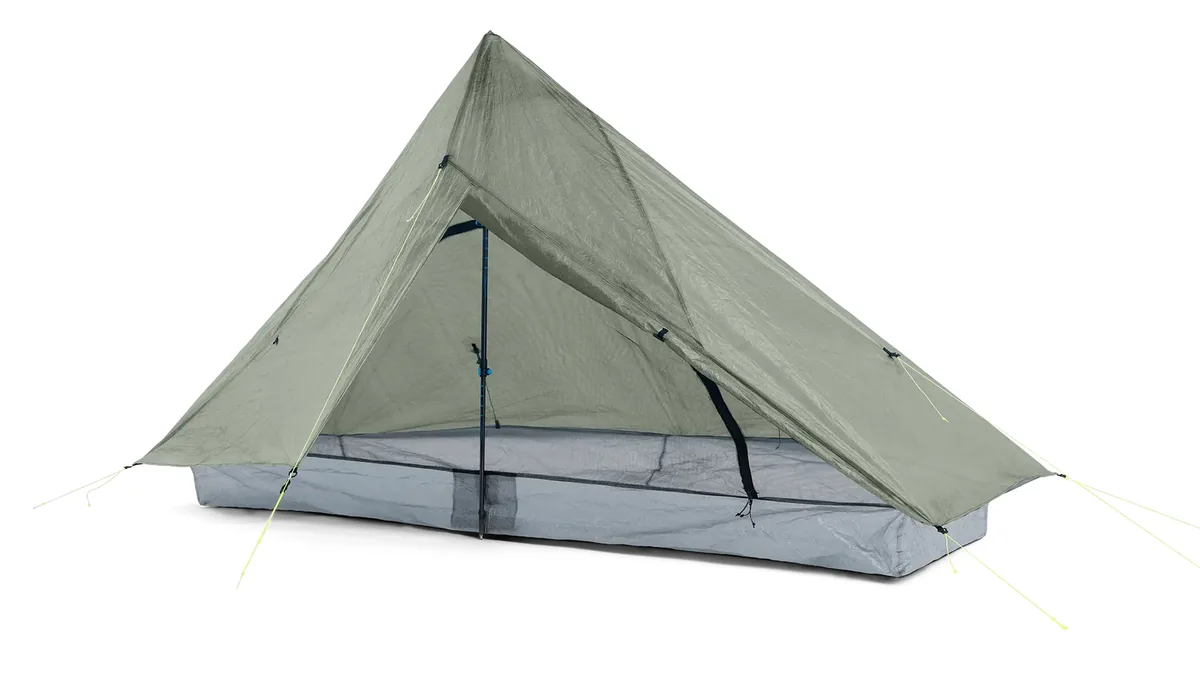
Zpacks
Zpacks Plex Solo
Twelve point three ounces is the lightest full shelter in this catalog — bathtub floor, bug netting, taped seams, storm doors, all of it — and it stands on one 52-inch trekking pole. Fifty-two inches is also the peak height, which is the tallest here, so you can sit fully upright in a tent that weighs less than a litre of water. Twenty point six square feet for one person is roomy by solo standards. What you accept is single-wall condensation, a $599 price, and a shelter whose fabric you handle carefully for the rest of its life.
Best for: A solo thru-hiker whose base weight is the whole point.
Full spec sheet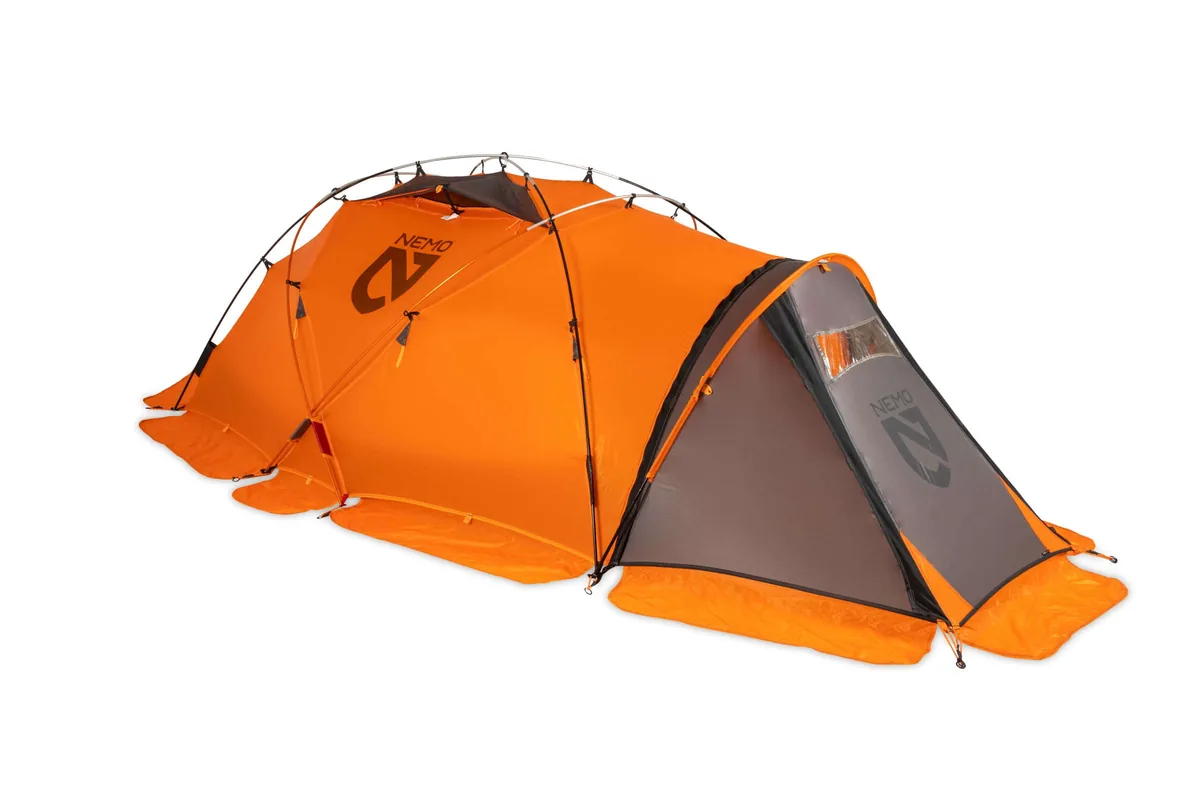
Nemo
Nemo Chogori
Forty square feet for two people is twenty square feet each, which is the roomiest per-person figure of any two-person tent in this catalog — and it is deliberate, because an expedition tent is somewhere you sit out a storm for two days, not somewhere you sleep. Two doors, two vestibules, 113 ounces, and a peak height of only 39 inches, which is the shape that survives wind. Nemo does not publish fabric details for it, which is the one thing you would want to know at $800.
Best for: Expedition and basecamp use where you will be inside for whole days and wind matters more than headroom.
Full spec sheetMountain Hardwear
Mountain Hardwear Trango 2
The Trango has been the American expedition tent for thirty years, and the numbers show what that job asks for: 40 square feet for two people, and only 38 inches of peak height. Twenty square feet each is the roomiest per-person figure in this catalog, tied with the Nemo Chogori, because the tent is somewhere you wait out weather rather than somewhere you sleep. Eight and a half pounds and $1,050. Mountain Hardwear's own site returns 403 to automated requests, so the fabric details are not captured here.
Best for: Expeditions and big alpine objectives where storm days inside are part of the plan.
Full spec sheet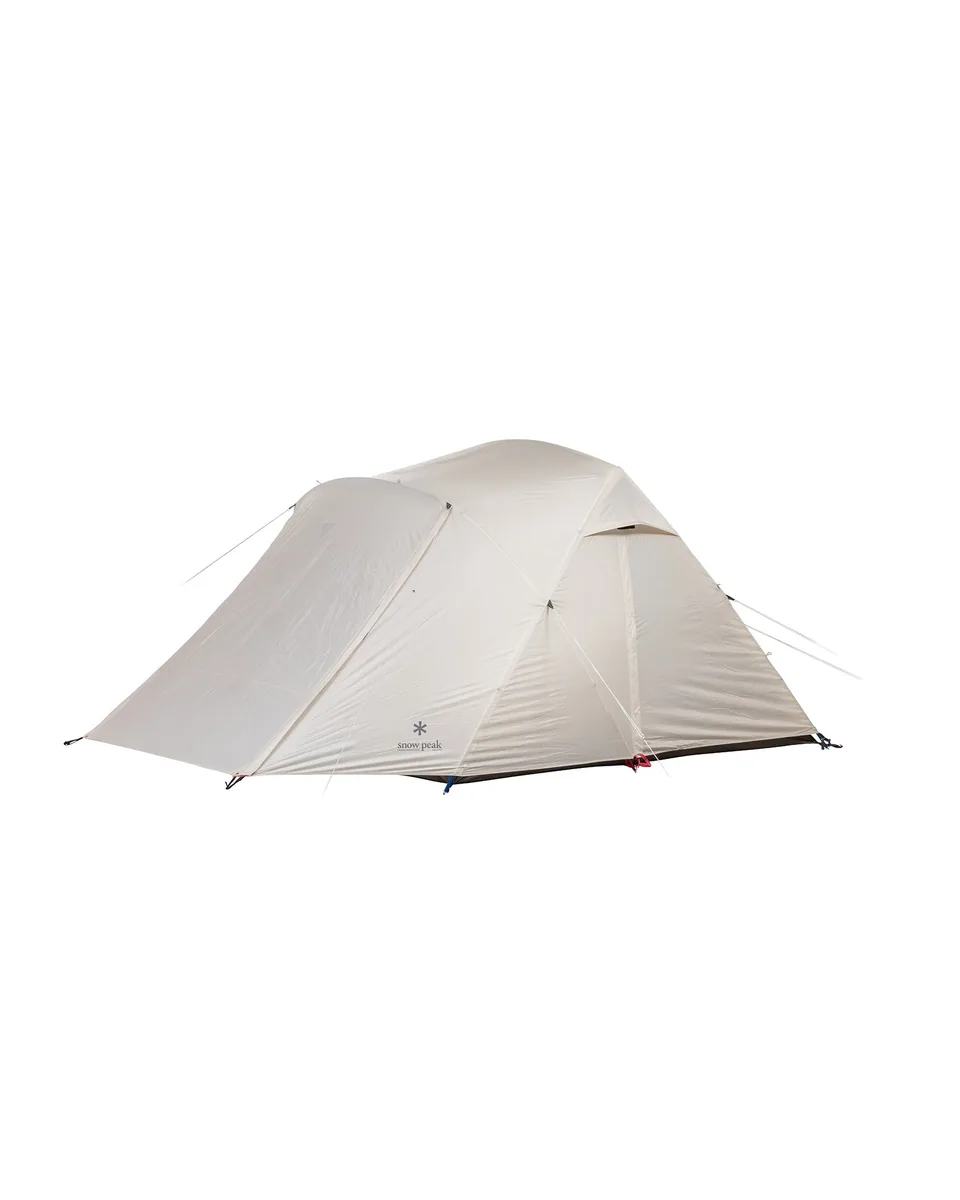
Snow Peak
Snow Peak Alpha Breeze
Four doors — one on every side — is the Alpha Breeze's whole idea, and it produces the best-ventilated family tent in this catalog by a wide margin. Snow Peak took its cues from A-frames and Adirondack shelters rather than from dome tents, so the profile is a long ridge rather than a bubble, and 77 inches of peak height across 77 square feet works out to 19.3 square feet per person at the rated four, the roomiest family tent here per head. Twenty-four pounds on aluminium poles.
Best for: Hot-weather family camping where airflow is the deciding factor.
Full spec sheetREI Co-op
REI Co-op Half Dome 2+
REI replaced the Half Dome SL with this in 2025 and went the other way on weight: thicker fabrics, a bigger floor, and 80.8 ounces minimum against the SL's 63. The floor is 35.8 square feet on 92 by 56 inches, which is long enough for two six-foot sleepers and wide enough for two standard pads with gear between them, under 42 inches of headroom and two doors opening onto 19.2 square feet of vestibule. The footprint comes pre-attached in the box, so $369 is the whole price rather than the starting one. Buy it for the space; the ultralight crowd left this weight behind years ago and is not coming back for it.
Best for: Two people who want floor space and a footprint in the box, carrying it a few miles rather than a few hundred.
Full spec sheet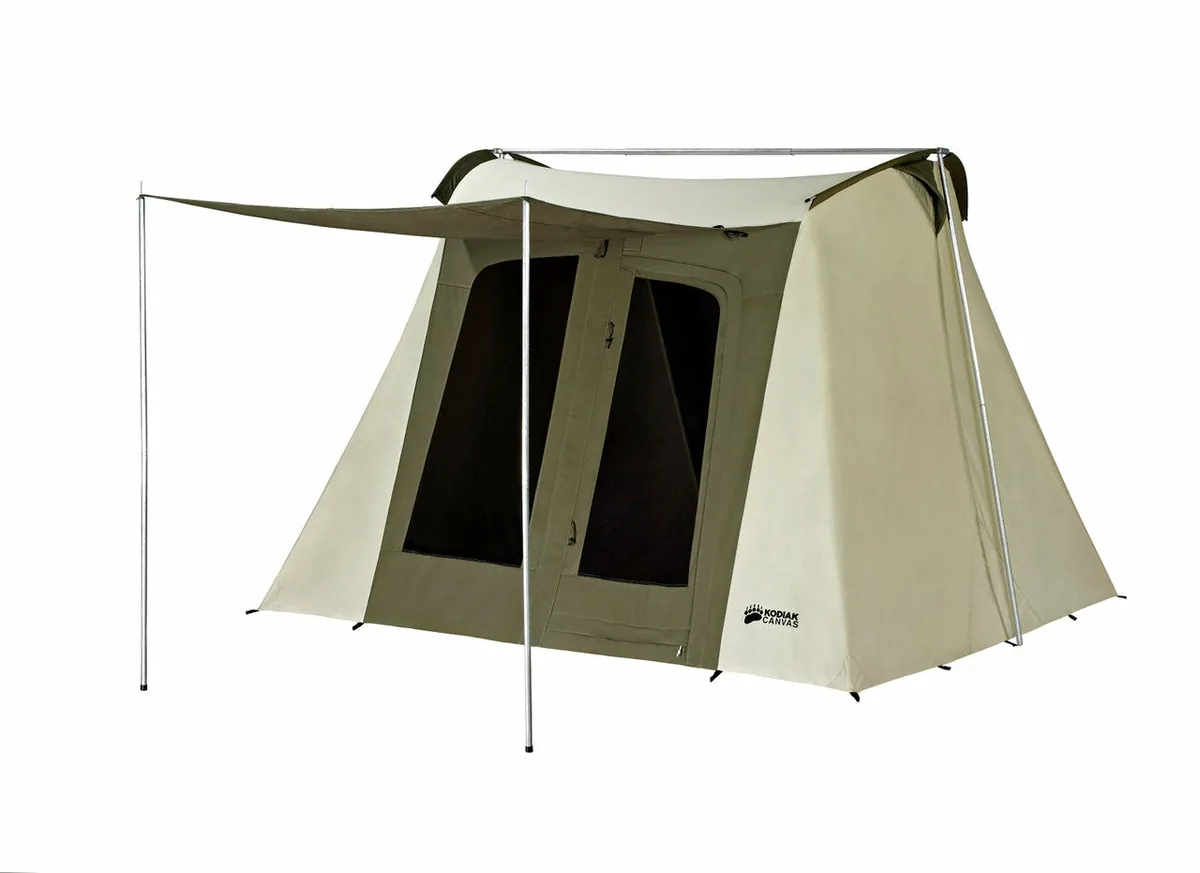
Kodiak Canvas
Kodiak Canvas Flex-Bow Deluxe
Canvas changes the arithmetic. A Flex-Bow weighs sixty-eight pounds in the 10 by 10, which puts it beyond any notion of carrying, but cotton duck breathes — so it does not rain condensation on you the way a sealed polyester cabin does — and a 16-ounce vinyl floor is not something you can puncture with a tent peg. One-inch galvanised steel tube and spring-steel bow rods hold it up in wind that folds aluminium. It is a four-season tent in the honest sense: people run stoves in these and live in them for a week.
Best for: Week-long base camps, hunting seasons and winter camping where the tent is a building.
Full spec sheet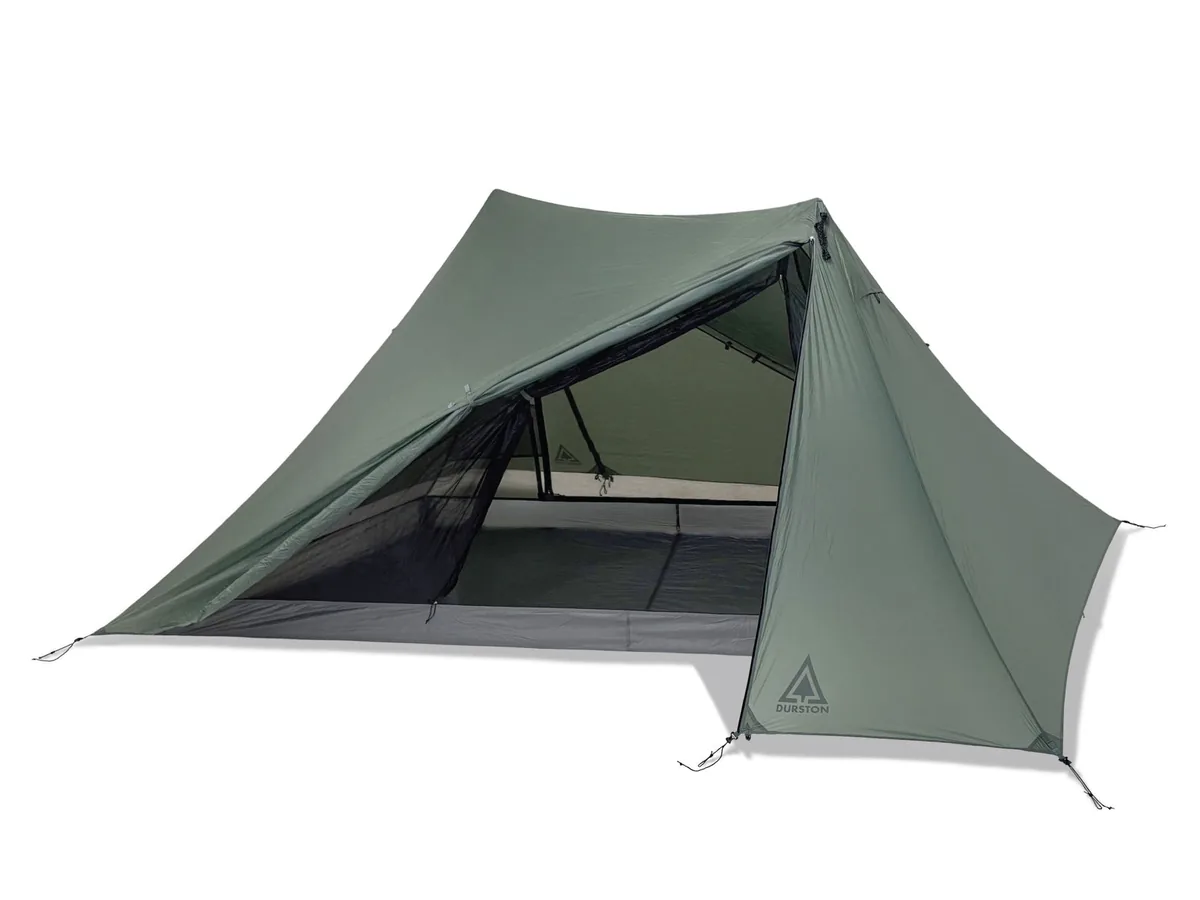
Durston
Durston X-Mid
The X-Mid 2 is the most floor-per-ounce tent in this catalog: 33.2 square feet — more than an MSR Hubba Hubba LT 2 — for 31.3 ounces, and $319. The geometry is a rectangle pitched off two offset trekking poles, which puts the poles at the corners of the doorways instead of in the middle of them, and pitches with four stakes. It is double-walled, which almost no trekking-pole shelter this light is, and the 3500 mm silpoly fly does not sag when it gets wet. The catch is the obvious one: no trekking poles, no tent, and the footprint is 65 by 100 inches, which needs a bigger flat patch than a dome does.
Best for: Anyone who already carries trekking poles and wants the most usable floor per ounce that money can buy.
Full spec sheet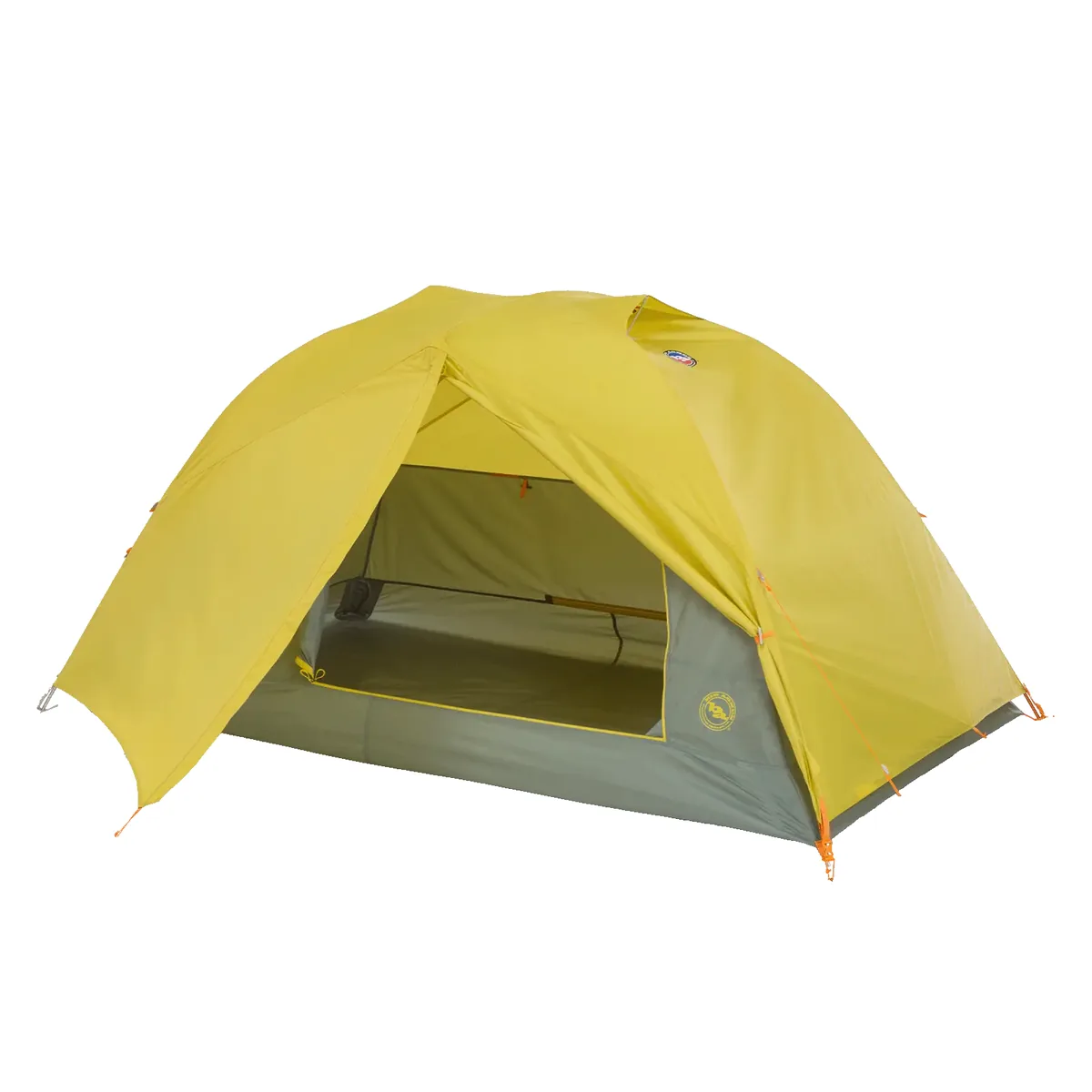
Big Agnes
Big Agnes Blacktail
The Blacktail is what happens when Big Agnes builds the Copper Spur's floor plan out of 75D polyester instead of 15D nylon: five pounds instead of two and a half, $300 instead of $600, and a floor you can pitch on gravel without flinching. Thirty-three square feet is more than the Copper Spur UL2 gives you, the 90-inch length actually fits a six-footer plus a pillow, and the fabric is PFAS-free. It is a heavy tent for a thru-hike and an easy one for weekends, and the Blacktail 4 at 60 square feet is one of the cheapest ways to get a freestanding four-person tent that still carries.
Best for: Weekend backpacking and camp-at-the-car nights where durability and price matter more than the last two pounds.
Full spec sheet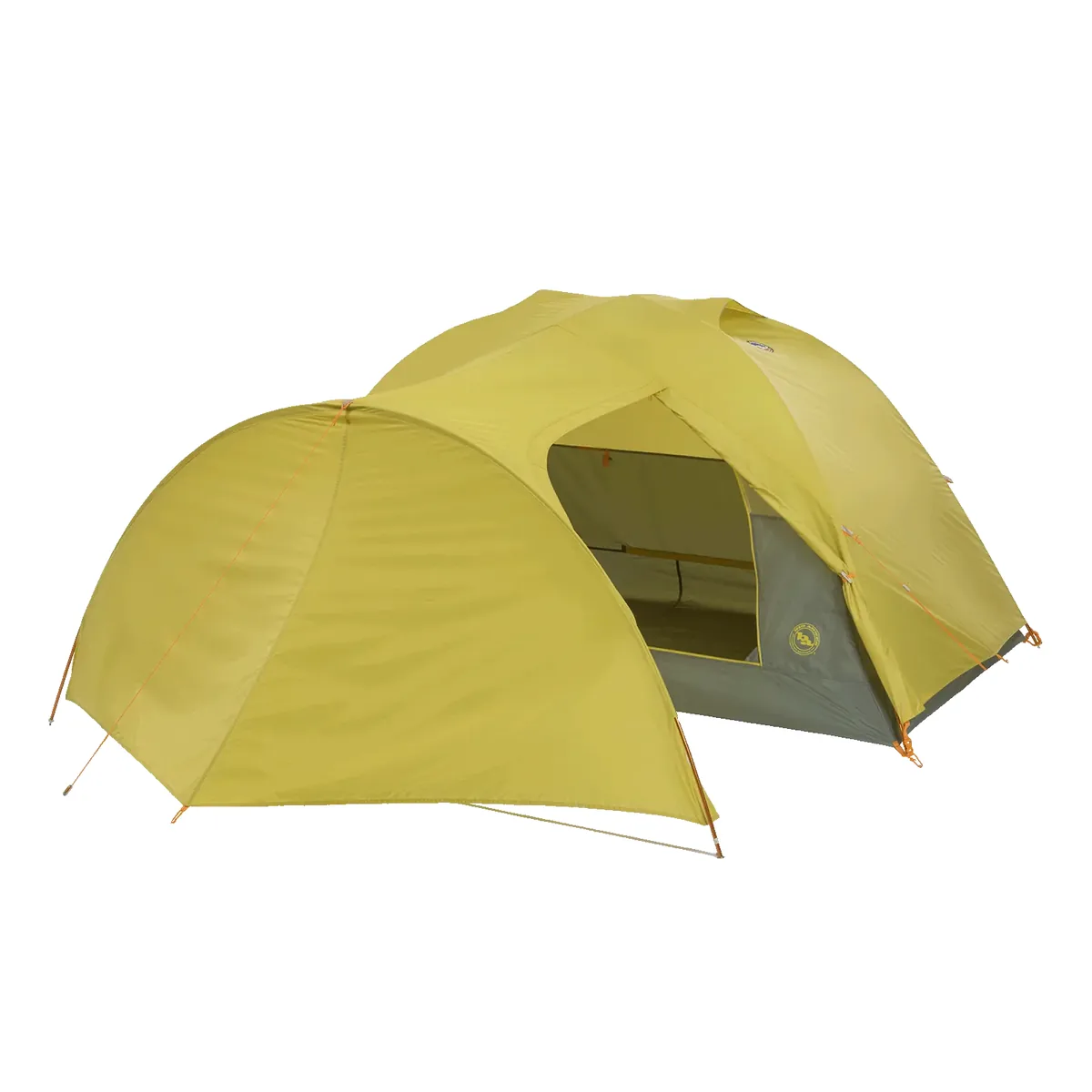
Big Agnes
Big Agnes Blacktail Hotel
Same tent as the Blacktail, with one side's vestibule blown out to 28 square feet on an extra pole — a covered porch you can put two camp chairs under and sit out a rain shower in. That is 37 square feet of vestibule against the plain Blacktail's 18, for nine ounces and $50. If you camp anywhere that rains for a full day, it is the single most useful $50 in this catalog; if you are counting grams it is the wrong tent entirely.
Best for: Rainy-region camping where you need somewhere dry to sit that is not inside the tent.
Full spec sheet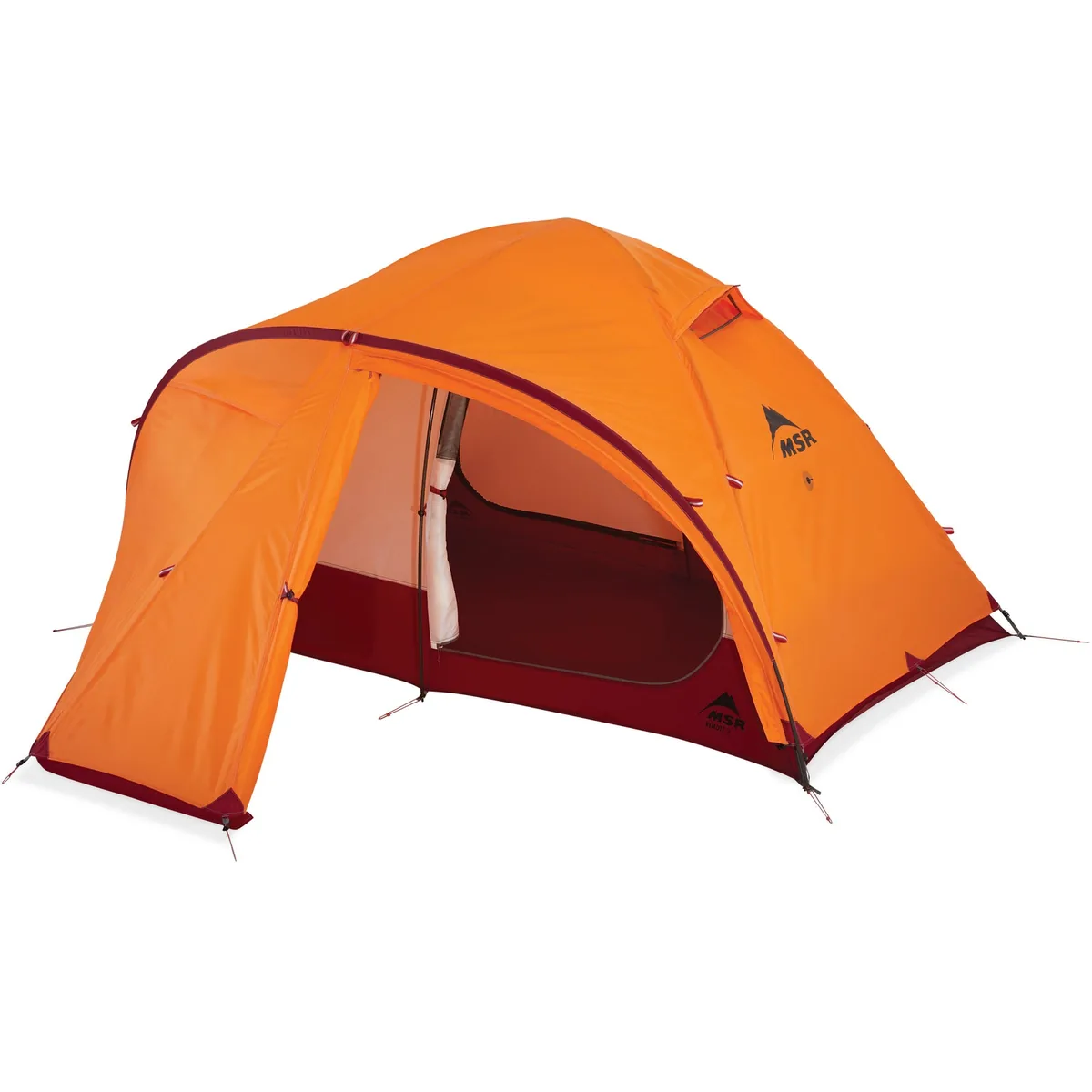
MSR
MSR Remote
A 10,000 mm floor is not a typo — it is five times what a good three-season tent carries, and it is what you want when the tent is pitched on snow that will melt under you for a week. The Remote 2 pairs it with a 68D polyester fly that will not stretch in the wet, three Syclone poles, 22 square feet of vestibule and a 55-inch floor width that makes it genuinely roomy for two in winter kit. Seven and a quarter pounds is the price, and it is an honest one for a basecamp tent.
Best for: Winter basecamps and expeditions where the tent sits on melting snow for days at a time.
Full spec sheet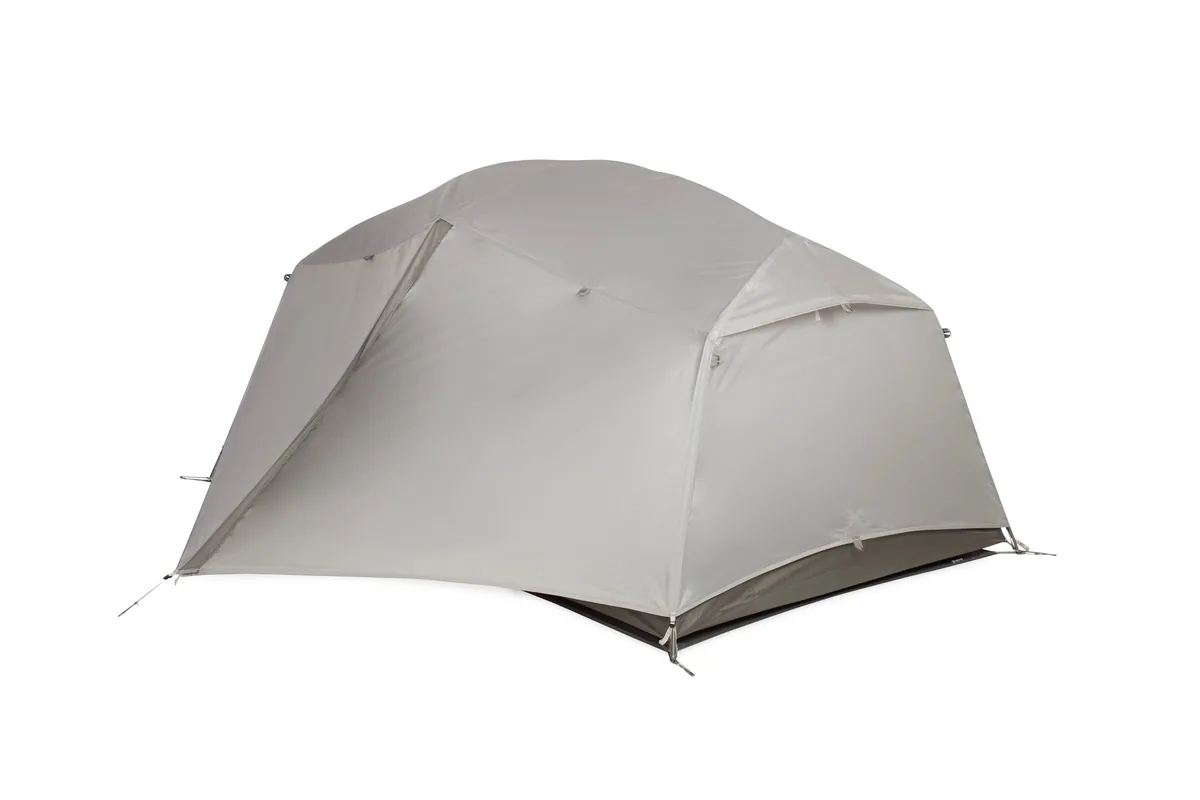
Nemo
Nemo Aurora
Three hundred dollars, footprint included, 32.4 square feet, a 53-inch rectangular floor and a 2000 mm floor rating — the Aurora is the value entry in this catalog and it does not feel like one from the inside. The price of that is 75 ounces, nearly five pounds, in 75D polyester that will outlast the thin stuff by years. Nemo sells it as a bundle with the footprint, which is how a $300 tent ends up cheaper than a $300 tent.
Best for: A first backpacking tent, or a loaner tent that will get treated badly and survive it.
Full spec sheet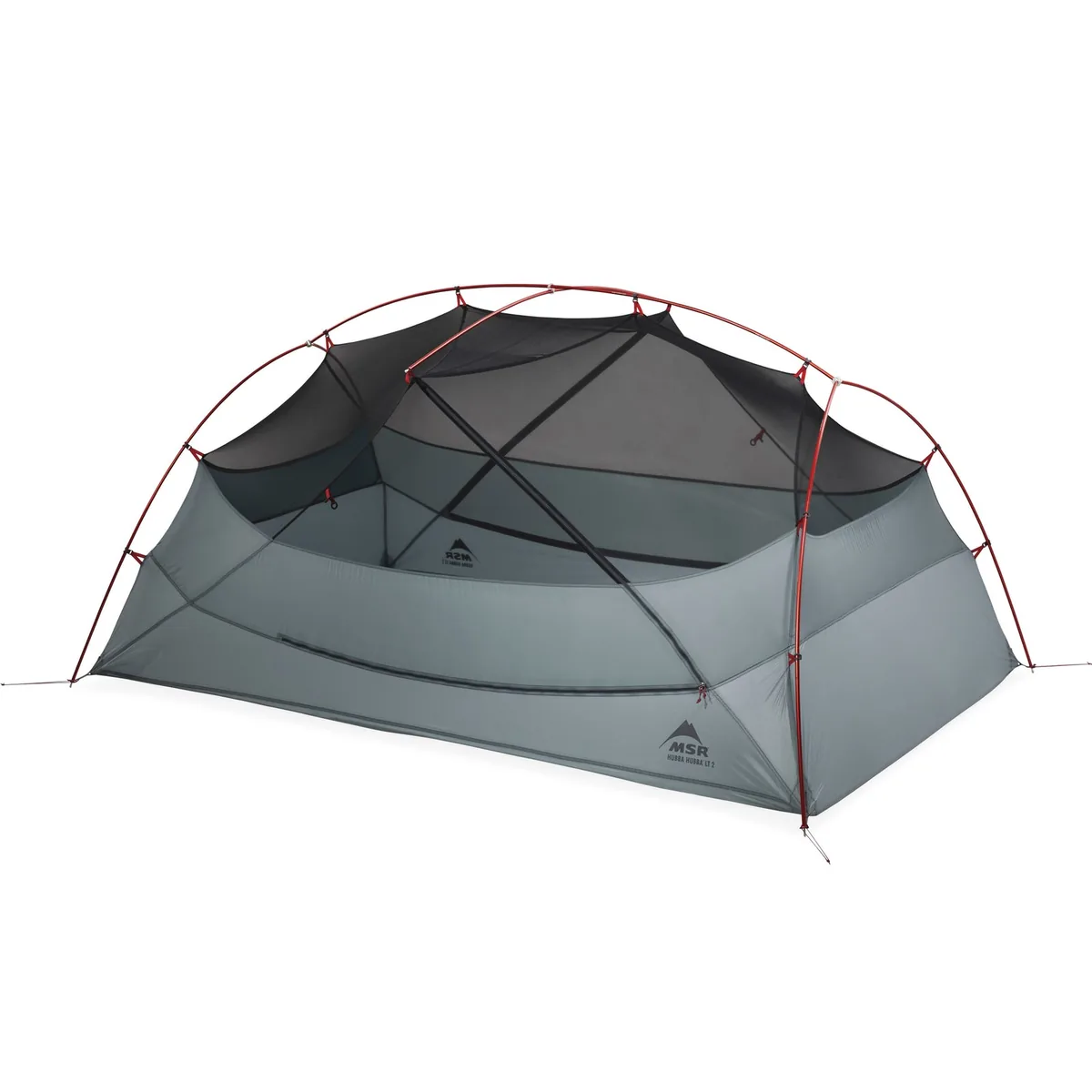
Thirty-two square feet is the most floor of any three-pound freestanding two-person tent here, and the Hubba Hubba LT gets it with a single hubbed DAC pole and a symmetrical shape that holds its width rather than tapering to a point. Sixteen square feet of vestibule, two doors, 40 inches of head height, and a 1800 mm floor that is meaningfully tougher than the 1200 mm tents at the same weight. MSR does not publish interior floor dimensions for this model, which is the one number missing from an otherwise complete spec sheet — and the one that would answer the pad question.
Best for: Two backpackers who want maximum floor per ounce in a freestanding tent and do not need a published pad-fit number.
Full spec sheet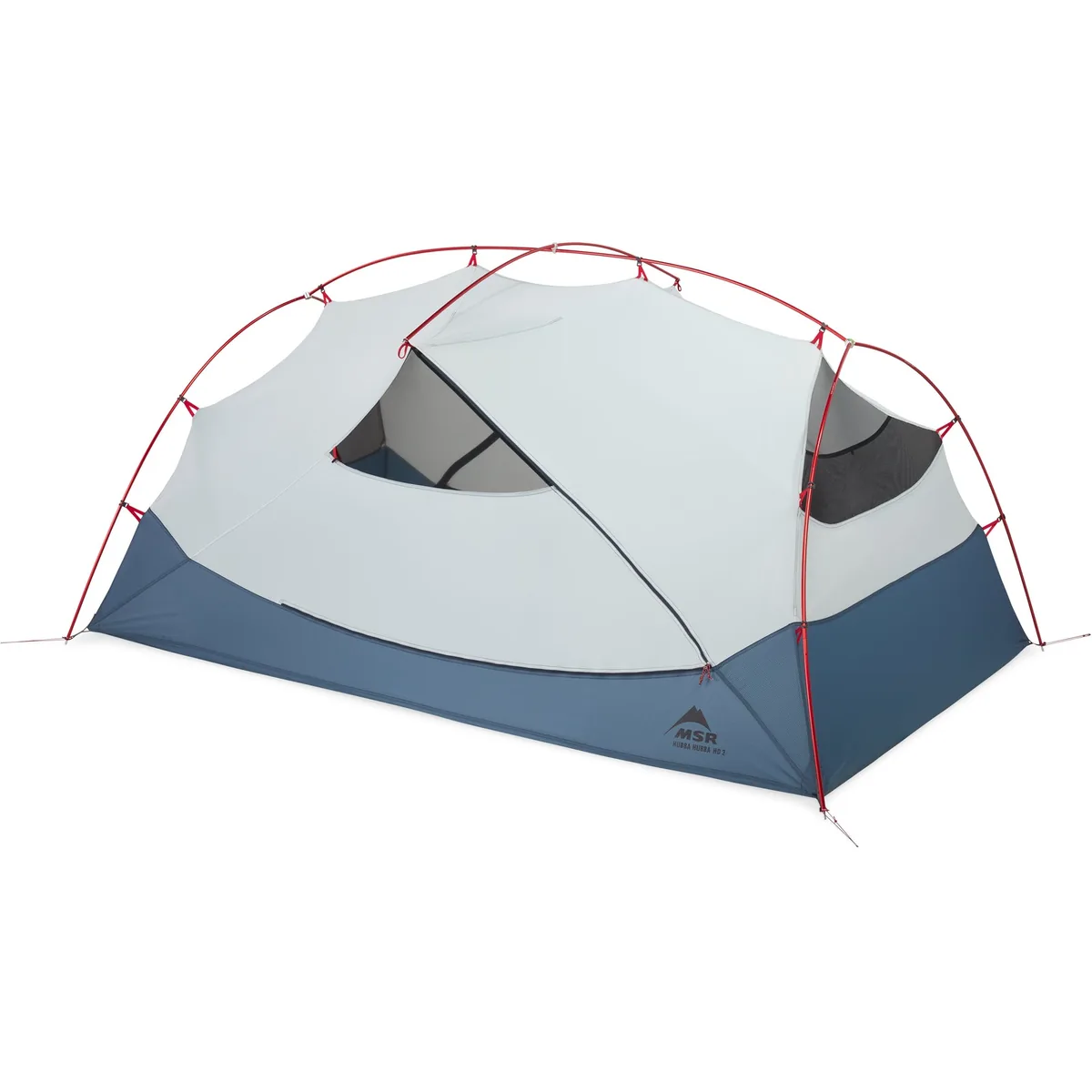
Same footprint and same 32 square feet as the Hubba Hubba LT, with the waterproofing turned up: a 3000 mm fly against the LT's 1200, and a 30D floor rated 6000 mm against the LT's 20D at 1800. That is the highest floor rating of any three-season tent in this catalog, and it costs nine ounces and $50. If you camp in the Pacific Northwest, Scotland or anywhere else where the ground is wet before the rain starts, this is the version of the Hubba Hubba to buy.
Best for: Persistently wet ground — rainforest, bog, Scotland — where a 1200 mm floor wets through under a knee.
Full spec sheet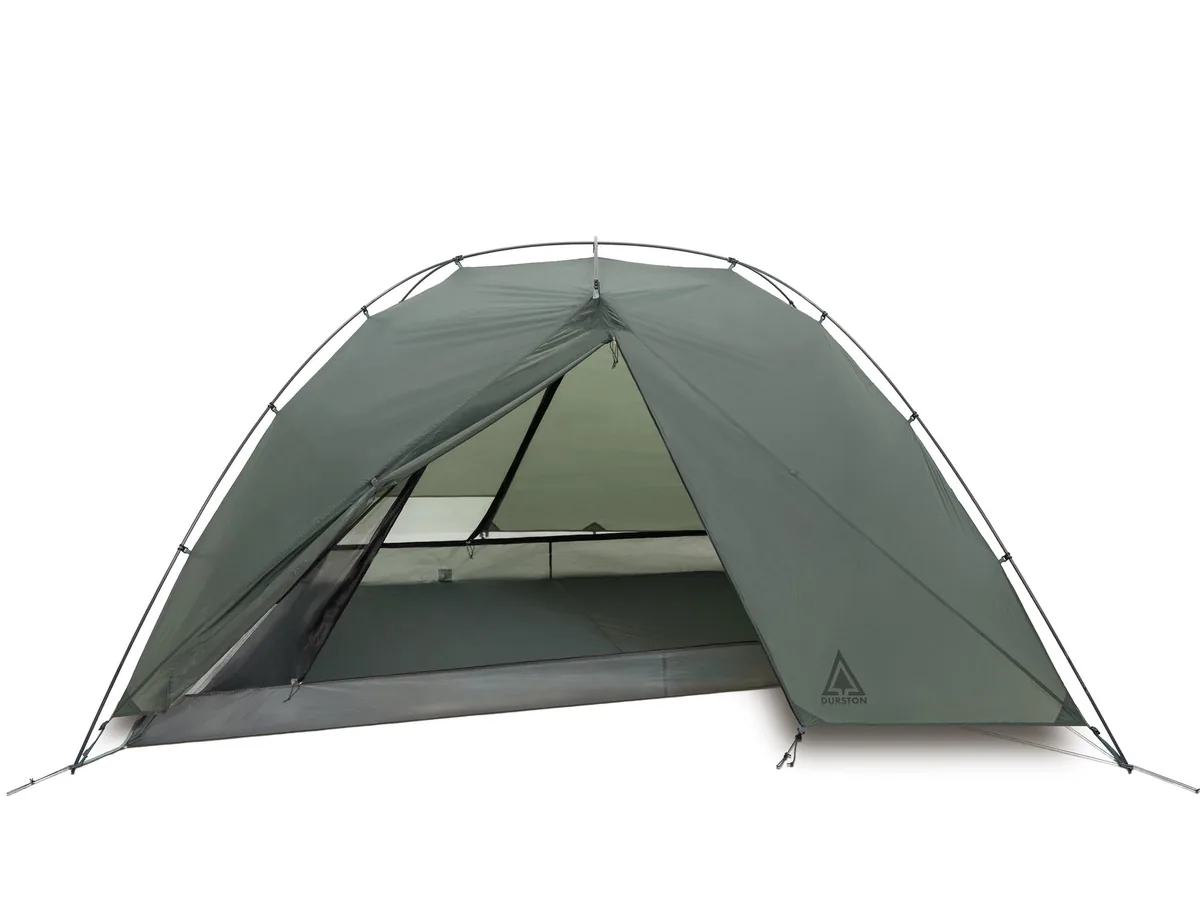
Durston
Durston X-Dome 2
Durston's freestanding tent, for people who liked the X-Mid's numbers but camp on platforms and slabs. Thirty-two square feet on an 88 by 52 inch floor, 18 square feet of vestibule, 3500 mm on both fabrics, and carbon poles that bring it in at 44 ounces — genuinely freestanding with no mandatory stakes. It is thirteen ounces heavier and $200 dearer than the X-Mid 2, which is the price of not needing trekking poles.
Best for: Someone who wants X-Mid-class space and fabric specs but pitches on wooden platforms or rock.
Full spec sheetColeman
Coleman Sundome
The Sundome has been the default American camping tent for decades, and the reason is the per-person floor: 63 square feet across four people is 15.75 each, more than most $400 backpacking tents manage, for about $118. It is a fair-weather tent — a partial fly rather than a full one, fibreglass poles, a polyethylene floor, and nothing covered outside the door. In settled weather none of that matters. In a two-day storm all of it does. Coleman's own site blocks automated requests, so the dimensions here come from retailer and review listings.
Best for: Settled-weather campground trips and a first tent that nobody will be precious about.
Full spec sheet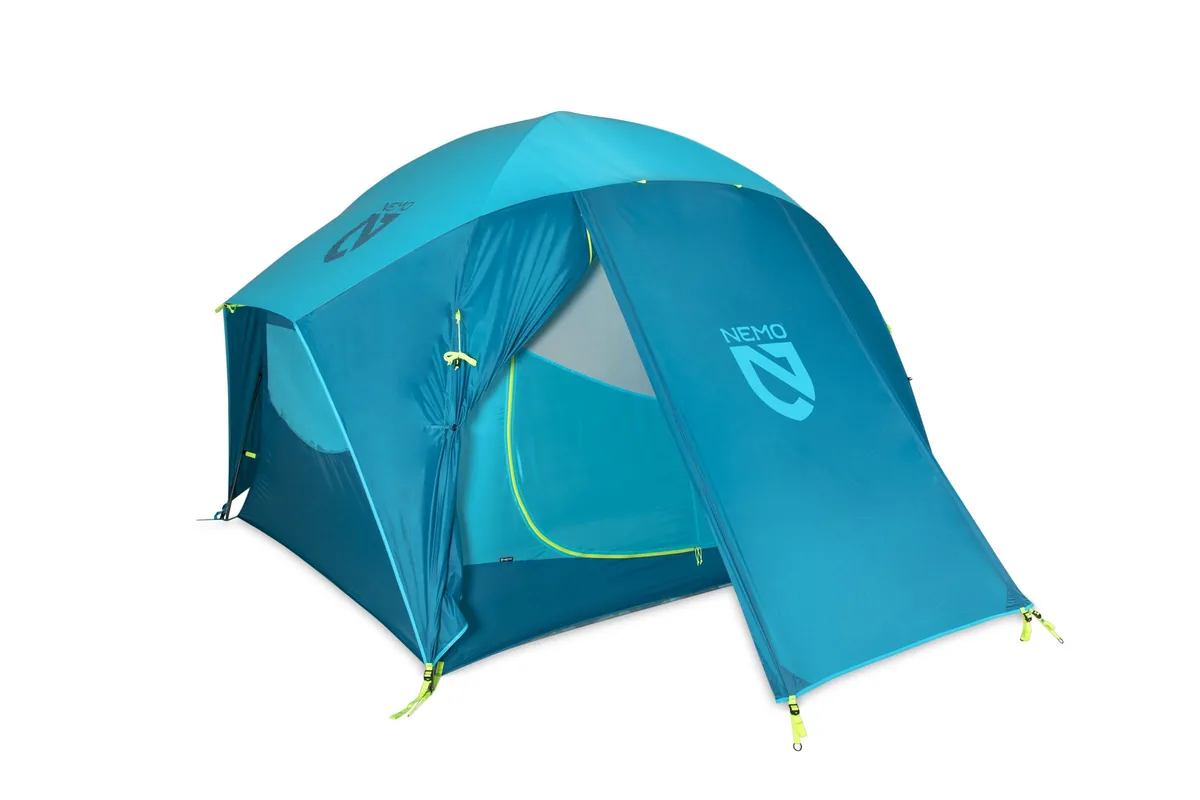
Seventy-five inches of peak height in the 4-person and 77 in the 6, with two 19.5-square-foot vestibules and a 150D floor — the Highrise is a proper standing-height cabin at $400. It is aluminium-poled rather than steel, which is why it weighs 13 pounds 12 ounces instead of the 25 to 40 pounds an instant steel cabin does, and it packs into a duffel a quarter the length of one. Against the Big Agnes Big House it gives up five inches of height in the 4-person and adds 39 square feet of vestibule the Big House does not have at all.
Best for: Family car camping where you want to stand up, keep boots under cover, and still carry the bag one-handed.
Full spec sheet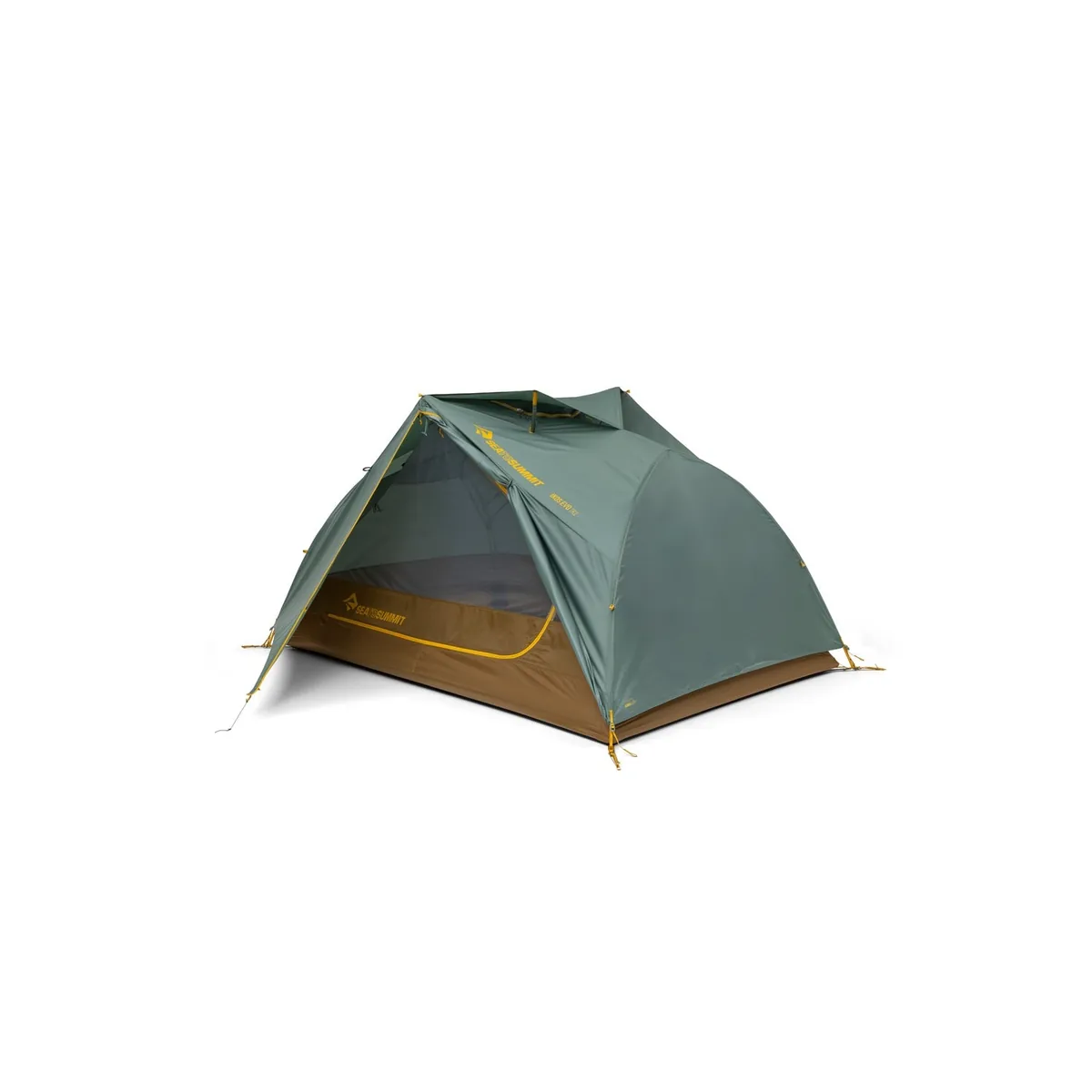
Sea to Summit
Sea to Summit Ikos Evo
The Ikos is the Telos idea at half the price: same Tension Ridge geometry, same multi-mode pitching, heavier polyester fabrics and plain anodised aluminium poles instead of DAC. Thirty-one square feet, 18.8 of vestibule, footprint included, $350 — and 86 ounces, which is a full two pounds more than the Telos. Sea to Summit is explicit that the low peak height is deliberate: the tent is shaped for wind stability, and you will not stand up in it.
Best for: Someone who wants the Telos layout and vestibule at half the price and does not mind carrying the difference.
Full spec sheetTarptent
Tarptent StratoSpire 2
The StratoSpire's hexagonal footprint is the reason to buy it: six small fabric panels under balanced tension, which is a far better shape in wind than the four big panels of a square mid. Inside there is 31.1 square feet on a 52-inch floor that widens to 62, plus 25.6 square feet of vestibule split across two sides, and it is genuinely double-walled with a choice of mesh or solid inner. Thirty-nine ounces, $339, and two trekking poles that can go handle-up or tip-up depending on their length.
Best for: Exposed camps where a square mid gets loud, and pairs who both use wide pads.
Full spec sheet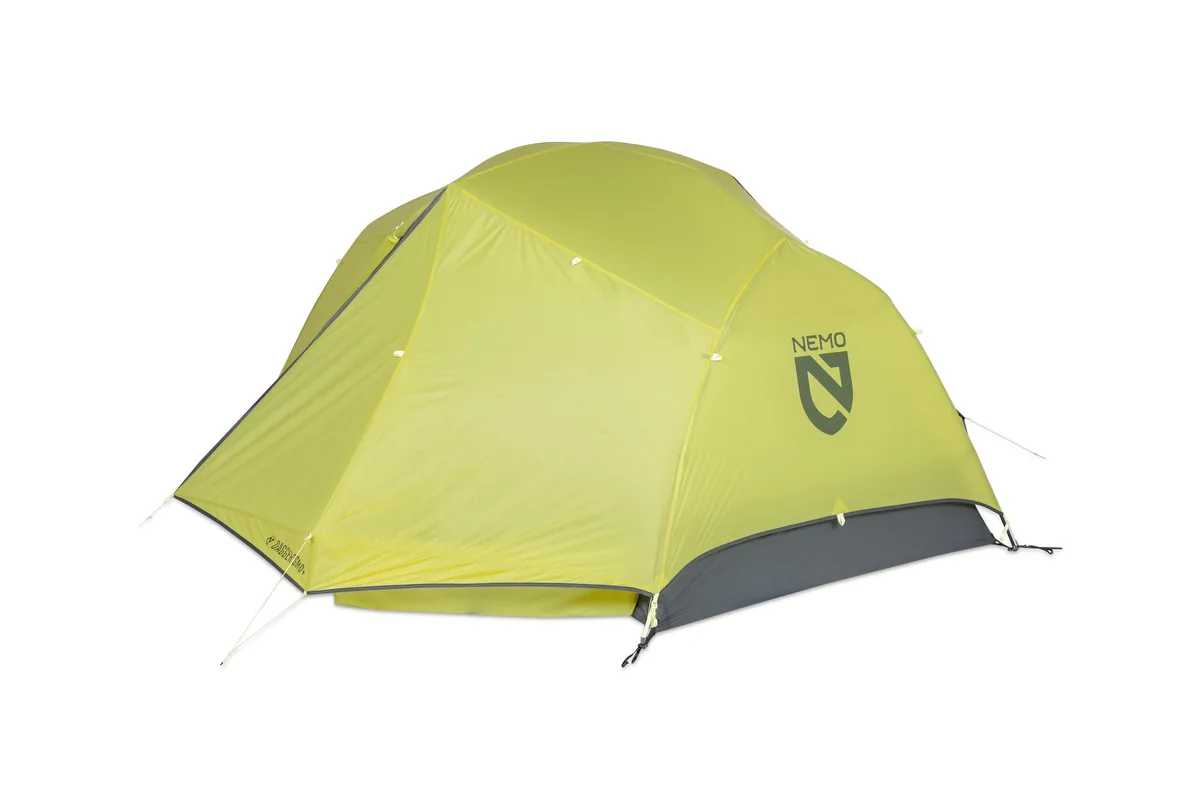
Nemo
Nemo Dagger OSMO
The Dagger's pitch is rectangular floor plus huge vestibules: 30.6 square feet that stays 50 inches wide from head to foot instead of tapering, and 24.2 square feet of vestibule, which is more covered gear space than some tents have floor. OSMO is Nemo's recycled poly-nylon blend, and the claim that matters is that it stretches about a third as much as nylon when wet — so the fly you tensioned at dusk is still tight at 3am rather than resting on the inner. Fifty-three ounces is a real backpacking weight rather than an ultralight one, and the current pole structure added four inches of door height over the previous generation.
Best for: Two people who use wide pads and want the tent to still be tight at 3am in the rain.
Full spec sheetTarptent
Tarptent Double Rainbow
A single carbon arch pole and a top strut, six stakes, and you have a 50-inch-wide shelter that takes two 25-inch pads — which almost nothing at 36 ounces does. The fabrics are the surprise: 20D silpoly and 30D nylon 66 both rated past 5000 mm, which is twice what most ultralight tents carry, and the polyester fly does not stretch when wet. It is not freestanding on its own, but two 55-inch trekking poles make it so, which is a useful trick on a platform. Floor area here is computed from Tarptent's published 88 by 50 inch floor, because Tarptent lists dimensions rather than area.
Best for: A pair on wide pads who want high waterproof ratings at an ultralight weight and a fair price.
Full spec sheet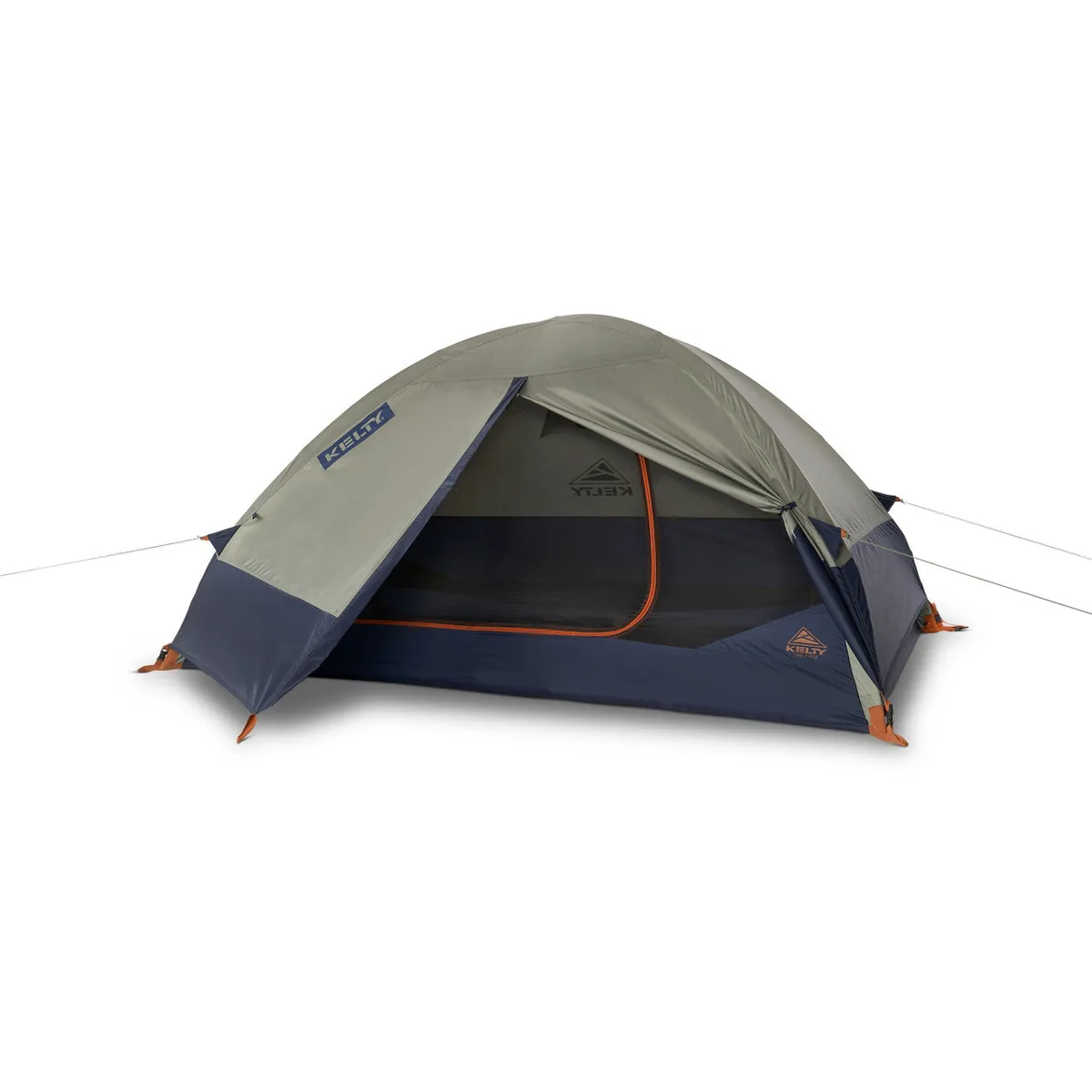
Kelty
Kelty Late Start 2
A hundred and sixty dollars for a freestanding two-person tent with aluminium poles, a 1800 mm 68D floor and 30.6 square feet is the cheapest serious backpacking tent in this catalog. Kelty's Quick-Corner system means the pole tips seat in the corners without threading, which is the bit that goes wrong in the dark. One door, one small 7.4-square-foot vestibule, and pre-bent poles that push the walls out more than the floor area suggests.
Best for: A first backpacking tent, or a spare that lives in the car for guests.
Full spec sheet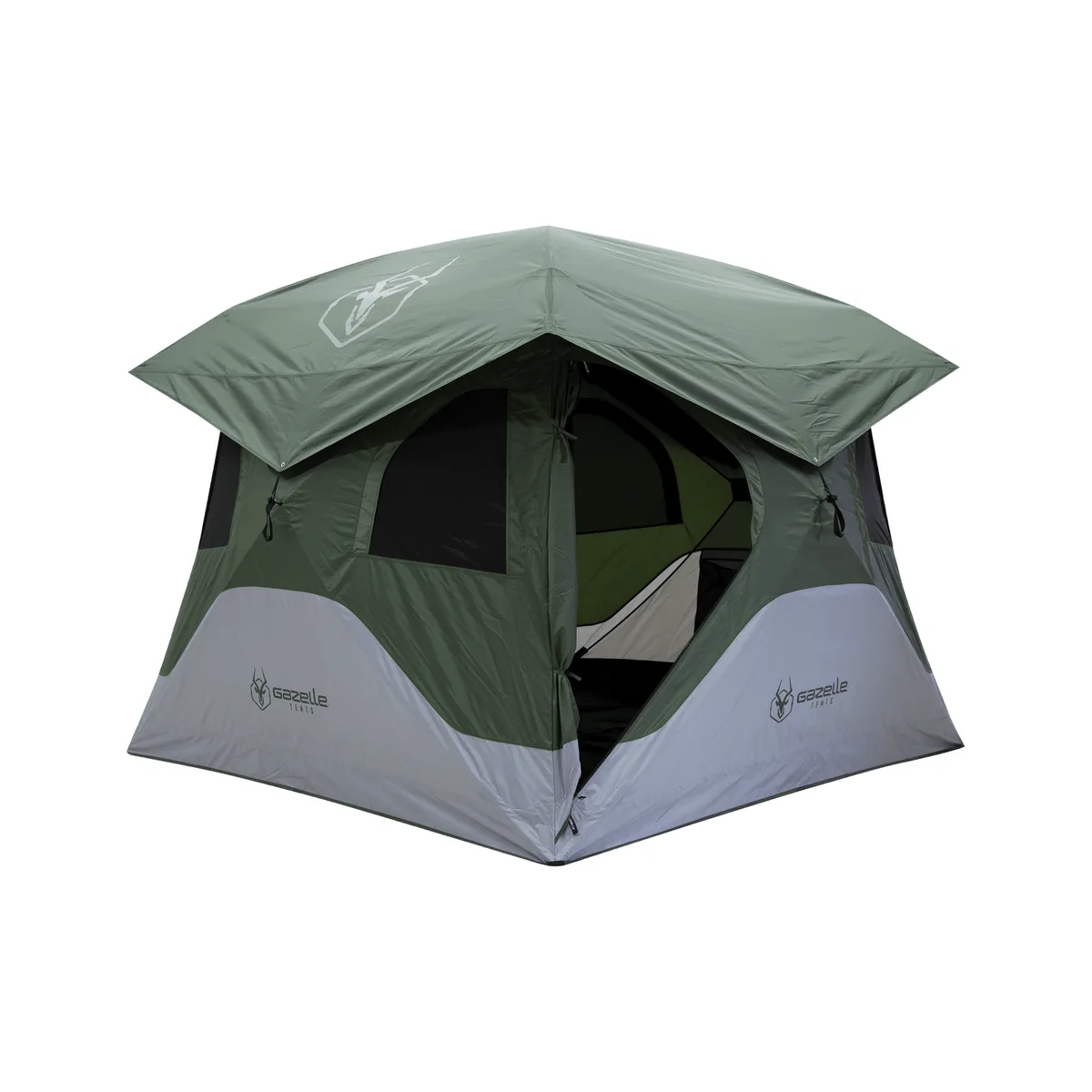
Gazelle
Gazelle T4 Hub Tent
The Gazelle is a hub tent: the frame is one permanently-jointed structure that you pull open like an umbrella, and it is up in about ninety seconds. Sixty-one square feet with a 78-inch ceiling, six mesh windows, two D-shaped doors, and a removable floor so it doubles as a screen room. The fabric is the standout — 210D shell at 2000 mm and a 300D floor at 5000 mm, which is far beyond anything else in the family-tent group. It packs into a 66-inch tube, so it needs a long boot or a roof rack.
Best for: Overlanding and base camps where setup speed and fabric toughness matter more than packed length.
Full spec sheet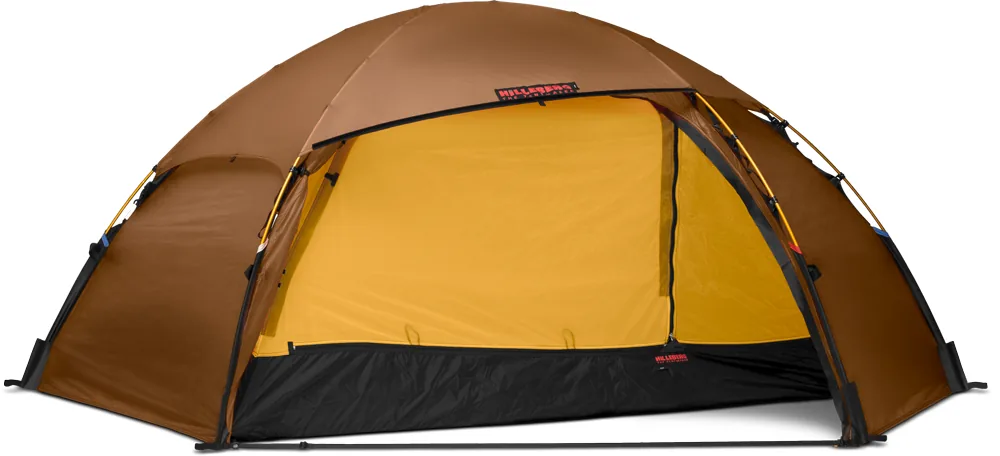
Hilleberg
Hilleberg Allak
The Allak is the freestanding Hilleberg — three 9 mm poles crossing into a dome that stands on its own, which is what you want on rock, on snow, and anywhere the ground will not take a stake. That costs 28 ounces over the Nallo and $440, and buys two doors, two vestibules and a shape that does not care which way the wind is coming from. At nearly a hundred ounces it is not a light tent; it is a tent you take because you do not want to think about the pitch.
Best for: Rock, snow and shifting wind, where you need a four-season tent that stands without stakes.
Full spec sheetStart from a question instead
Each of these is a filter over the same catalog with the ordering stated at the top, so you can check the ranking against any tent’s spec table.
Roomiest 2-person tents under 4 pounds
Ordered by floor area per person (floor area ÷ capacity), highest first.
27 tents
Lightest freestanding 2-person tents
Only tents marked freestanding (not semi-freestanding). Ordered by minimum trail weight, lightest first.
26 tents
Family tents you can stand up in
Peak height of 70 in or more. Ordered by floor area per person, highest first.
9 tents
The best tents under $200
Approximate price under $200. Ordered by floor area per person, highest first. Prices are snapshots from the last catalog update.
6 tents