 Ultralight~$700
Nemo
Nemo Hornet Elite OSMO
No citable rating — see why we hide some.
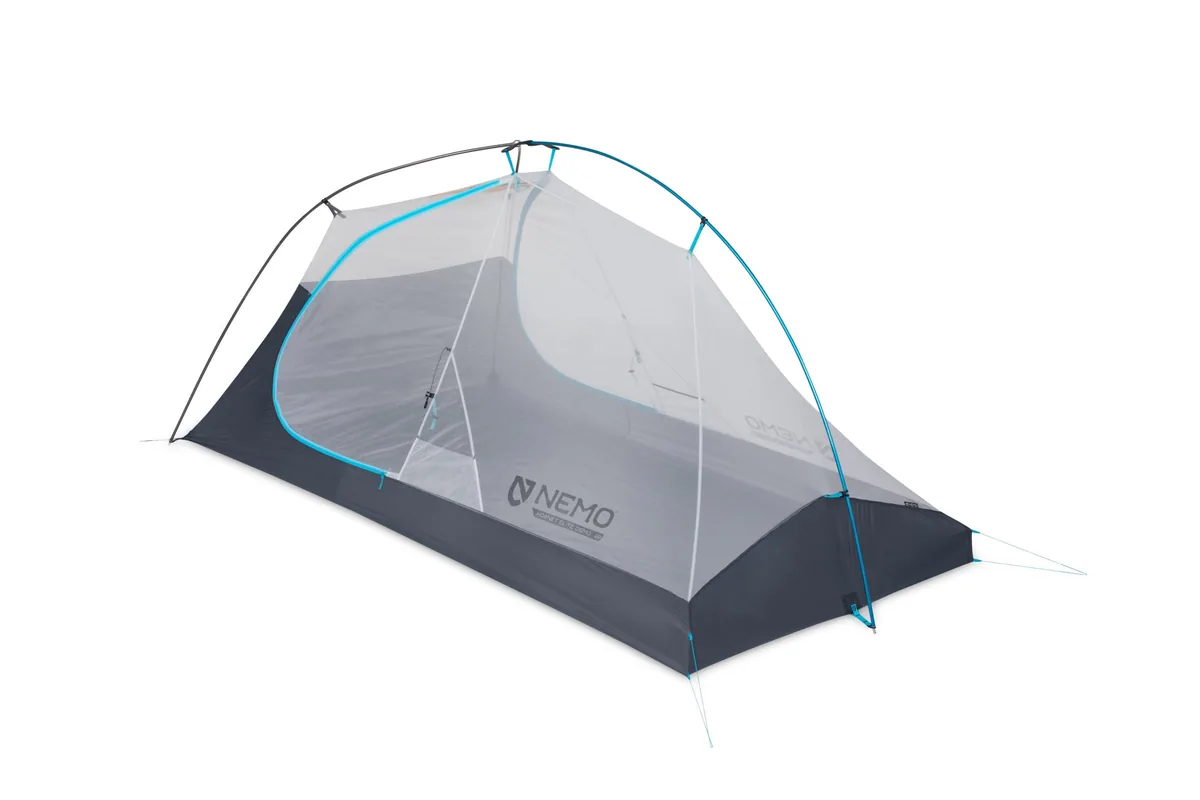
Twenty-seven ounces for a double-wall, two-door, pole-supported two-person tent is remarkable, and the Elite is one of very few tents that gets there without Dyneema. What pays for it is everything else: a 1200 mm floor, a 37-inch peak that is the lowest of any three-season tent in this catalog, and $700. This is the tent for someone whose base weight is already under ten pounds and who has run out of other things to cut.
Floor area per person
13.7 sq ft
Tight — under 14 sq ft each — shoulders touching, gear outside
Weight per person
13.5 oz
from the trail weight of 27 oz
Peak height
37 in
Approx. price
~$700
Pads: 25.0 in of floor width each — 2 × 25 in pads fit.
Length: a 85 in floor leaves room for a sleeper up to about 6ft 7in once you allow six inches for a foot box and a pillow.
Best for
An experienced ultralight hiker who wants a double wall and has already cut everything else.
The size run
One design, 2 capacities. The numbers at the top of this page describe the 2-Person; every size has its own figures below.
| Size | Sleeps | Floor area | Sq ft each | Vestibule | Trail weight | Packed weight | Floor L × W | Approx. price |
|---|---|---|---|---|---|---|---|---|
| 1-Person | 1 | 21.8 sq ft | 21.8 | 6.9 sq ft | 23 oz | 29 oz | 87 × 40 in | ~$600 |
| 2-Person | 2 | 27.3 sq ft | 13.7 | 12.4 sq ft | 27 oz | — | 85 × 50 in | ~$700 |
Specifications
- Type
- Ultralight
- Rated capacity
- 2-person
- Floor area per person(estimated)
- 13.7 sq ft (tight)
- Floor area
- 27.3 sq ft
- Vestibule area
- 12.4 sq ft
- Peak height
- 37 in
- Minimum trail weight
- 27 oz
- Weight per person(estimated)
- 13.5 oz (trail weight)
- Packed size
- 19 x 4 x 2 in
- Interior floor width
- 50 in
- Pad fit(estimated)
- 2 × 25 in pads fit
- Fits sleepers up to(estimated)
- 6ft 7in tall
- Doors
- 2
- Vestibules
- 2
- Freestanding
- semi-freestanding
- Poles
- aluminum
- Wall type
- double wall
- Season rating
- 3-season
- Fly fabric
- OSMO ripstop, 1200 mm
- Floor fabric
- OSMO ripstop, 1200 mm
- Floor hydrostatic head
- 1,200 mm
- Approx. price
- ~$700
Features
- No-see-um mesh canopy with an OSMO fly and floor
- Packs to 19 x 4 x 2 in, thin enough to slide down a pack side
- Flybar peak clip to hold the fly off the mesh
- Semi-freestanding single-hub pole
In its favour
- 27 oz beats most single-wall trekking-pole tents while keeping a double wall
- Two doors at a weight where most rivals have one
- 23 oz in the 1-person size is close to Dyneema territory at a nylon price
- Packs flat enough to sit alongside a bear canister rather than under it
Against it
- 1200 mm floor is thin protection against a wet pitch without a groundsheet
- 37 in of head height means sitting up is a stoop even for a short person
- $700 for the 2-person, which buys a Dyneema shelter from several rivals
- Fabric this light needs careful handling and a footprint if the ground is at all rough
Written from the published specification sheet, not from owner reports.
What owners report
Drawn from archived owner discussions, not from a test of our own.
What owners like
- Owners weighing it against other sub-two-pound tents describe it as lighter and more packable than the alternatives they considered
- It is one of very few double-wall two-door tents that gets under 30 oz without Dyneema, which is why it keeps appearing on shortlists
- Owners moving up from it to a trekking-pole shelter describe the Elite as the freestanding benchmark they were trying to beat
- The packed profile is thin enough to slide down the side of a pack rather than take up its top
Common complaints
- Owners who moved to a larger shelter describe the Elite's interior volume as noticeably smaller by comparison
- It is the most expensive way to get to this weight without Dyneema, and prospective buyers say so
- A 37-inch peak on the 2-person is the lowest three-season headroom here, and it shows when you sit up
- Semi-freestanding, so the corners still have to be pegged out — it is not a platform tent
The Elite is the Hornet with everything shaved. Owners looking at it are almost always comparing it against trekking-pole shelters rather than against other domes, because that is the weight class it lands in — and several describe starting there and then deciding that if they were going to accept the compromises they might as well go the whole way to a mid.
What they like is genuine: two doors, a real double wall, a pole set in the bag, and a packed size thin enough to disappear into a small pack. What they report afterwards is that the interior feels small. One owner moving from the Elite to a roomier shelter describes the difference in volume as obvious, and the spec sheet agrees — 37 inches of peak height is the lowest three-season figure in this catalog.
There is less discussion of it than of the standard Hornet, which is itself informative: it is a specialist's tent, bought by people who have already decided the trade and are not asking whether it is worth it.
Questions people ask about it
Is the Elite worth $220 over the standard Hornet?
You are buying about six ounces. Owners generally conclude it is not, unless your base weight is already low enough that six ounces is a meaningful fraction of it. The Elite also has a lower peak and a thinner floor, so the money buys weight and costs comfort.
Is it roomy enough for one person plus gear?
Yes — 21.8 square feet in the 1-person is generous by solo standards. It is the 2-person that owners describe as tight, and the low peak height is what they notice first.
Does the thin fabric need a groundsheet?
The floor is rated 1200 mm, the lowest of any tent here, so on anything but grass owners use something under it. A cut sheet of polycryo weighs one to two ounces and preserves the weight advantage the tent was bought for.